Thursday, November 7, 2013

Edward J. Steichen

Edward J. Steichen was born in Bivange, Luxembourg and was born on March 27, 1879. One year later Steichen's family immigrated to America, then 10 years later settled in Milwaukee. At a young age Steichen was very interested in arts along with his friends and when Steichen and was old enough, him and his friends bought a studio. They called themselves the Milwaukee Art Students League. Steichen started seriously considering photography when he partnered up with Alfred Stieglitz. Anyways, here are my three favorites by Steichen.


link
This image, I believe, was featured in Vogue Magazine and what I like about it is the mirror effect with the two models. It's also great how one is in the white dress while the other is in black. I also just have to say it looks like it's from the 20's so that drew me in, just the way their hair is done, they look so elegant.


link
Simple, just the way I like it. I think that this is a really interesting shot and I would possibly think about recreating an image inspired by this one. It's almost like the series that I did inspired by Tina Modotti with the hands

link
This is probably Steichen's most iconic photo. It's very different with the lace layered over her face. I like how both her face and the lacey fabric are in focus and it just add that special factor in this image. 

Tuesday, November 5, 2013

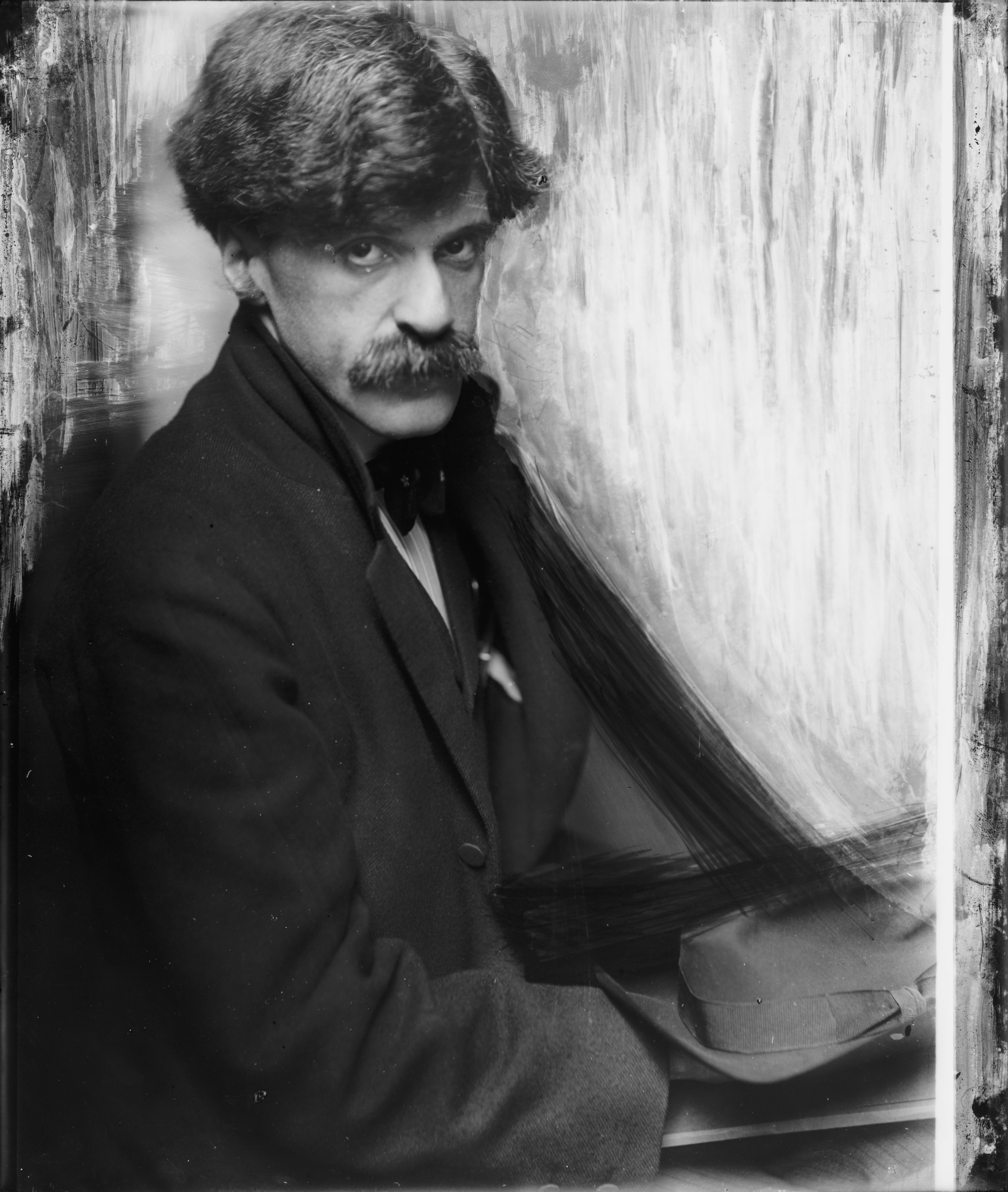
Alfred Stieglitz

Alfred Stieglitz is one of the most influential photographers even to this day. Stieglitz was born on January 1, 1864 in Hoboken, New Jersey. His family moved back to Germany where he took a course on photo chemistry in Berlin. When he returned to America in 1890 he planned to continue photographing. Stieglizt went on to join various photo clubs but really started to intensely photography in 1922. Few years later he married painter Georgie O'Keeffe. Stieglitz's last gallery was "An American Place."


link
This photo of Georgia O'Keeffe is amazing. The O'Keeffe's hands are at very interesting angles making them look elegant.


link
Clouds were one of the subjects that Stieglitz took numerous photos of in 1922 and I particularly like this one because of the darkness in the shadows.


link
The leading trees are what I love in this image. Not only do the trees follow one another but there are two leading lines joining each tree together. 

Gertrude Kasebier

link
Gertrude Kasebier was born Gertrude Stanton in Des Moines, Iowa on May 18, 1852.Gertrude married in 1874 when she was 22 to Eduard Kasebier who was a successful business man. It is known that the relationship was not a good one and that Gertrude felt that nothing would ever reach his standards of perfectionism. Kasebier became interested in photography when she was in her thirties. It is not known why, but she decided to go to art school for painting but later fell in love with photography. She opened a studio in 1897. Most of her photos concentrate on the bond between Child and Mother along with Native American portraits.  

The face of this girl looks very calm and I like the flowers in her hair. I think it could have been even cooler if she had something chaotic or blurry going on in the background to contrast with the calmness. 

 
This photo of the same girl gives a different feel. It's hard to describe her face but it looks like she's longing for something or someone. 

This image is quite different because the Native American man is dressed in more modern clothes rather than traditional which to me seems quite odd. It's like the man is trying to fit in but he will never be truly accepted.

Edward Curtis

Edward Curtis, born in Whitewater, Wisconsin on February 16, 1968 amazes me. He dropped out of school in the sixth grade and at the age of twelve proceeded to build his own camera. (He succeeded) During his time, I'm sure that this would be a very difficult task without modern technology. in 1885 Curtis became an apprentice in Minnesota at the age of seventeen. Keep in mind that while Curtis was growing up "Americans" were fighting the natives of the land. When Curtis was 8 Custard was defeated. in 1890 Curtis begins to photograph some local natives one of the first being Princess Angeline whom he payed a dollar for every photo taken. This started Curtis' photographic journey. Below are my three favorites of his. 

One of Curtis' first photos of Princess Angeline, a local clam digger who much preferred to have her photograph taken then dig for clams. 

Photo of Geronimo. I really like the profile in this photo and it shows that Natives are also people, who were scarcely respected at the time.

 
The traditional clothes worn by the child in this photo are cool. I love how in Curtis' images it's always the Natives as they are and want to be. 

Jacob Riis


Born in Ribe, Denmark on May 3, 1849 Jacob Riis is still today recognized by his photo journalism work. When Riis came to America (more specifically New York) when he was 21 in 1870 he searched endlessly for a job and soon found himself employed as a carpenter. Eventually Riis was later employed as a police reporter for the newspaper "The New York Tribune." This was the time that Riis started to photograph the poverty around him in New York. Riis was one of the first to use flash powder allowing him to photograph at night. His published work "How the Other Half Lives," is what put his dark images in the light. 

Photojournalism is probably my favorite category of photography because they are based off of a true story. As you can see, the young boys above do not look like young boys at all, rather cold and troubled men. (Except for the little one in the left hand corner.) You can only image the harsh realities they face being a young child yet made to work to support your family. Their faces are smudged with coal and I think that the most breath taking faces would be the child in the middle in the first row and the two behind him on his left and right. All forms of joy and childish carelessness is gone. It really makes you grateful that we live in this time where we don't need to work in cruel conditions to survive.

This photo, like the last, shows children in harsh conditions. You can imagine the cold temperatures as the helpless children huddle to gain warmth from each others bodies. It's quite chilling to know that America at one point was like this. Riis' images allow us to take a glimpse at the past which is mostly covered up today. 

The blank expression is what really caught my attention for this image. The man sitting down has blank eyes but his face is in awe, what could be happening behind the camera? Is there even anything going on or is this man just traumatized by the living conditions?

Eadweard Muybridge


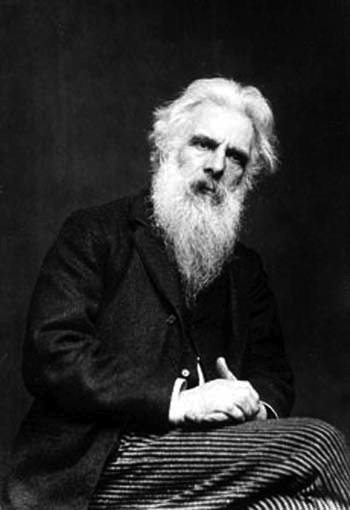
The "Grandfather of Motion Picture" or Eadweard James Muggeridge was born on April 9, 1830 in Kingston upon Thames, England. Years later, when Muggeridge was around 25 he immigrated to America in 1850. Muggeridge then changes his name to Muybridge. Now in California, where the gold rush is going on Muybridge finds himself interested in photography. One of his first big photos (at the time it was not very popular) was Muybridge's horse photo. What had happened was Muybridge was experimenting weather a trotting horse had all four hooves on the ground at once. Below is the result.

link
The collection of images is called "Horse in Motion." It's actually a very captivating collection when you look at it frame by frame. You can conclude that Muybridge found the answer to his prodding question.


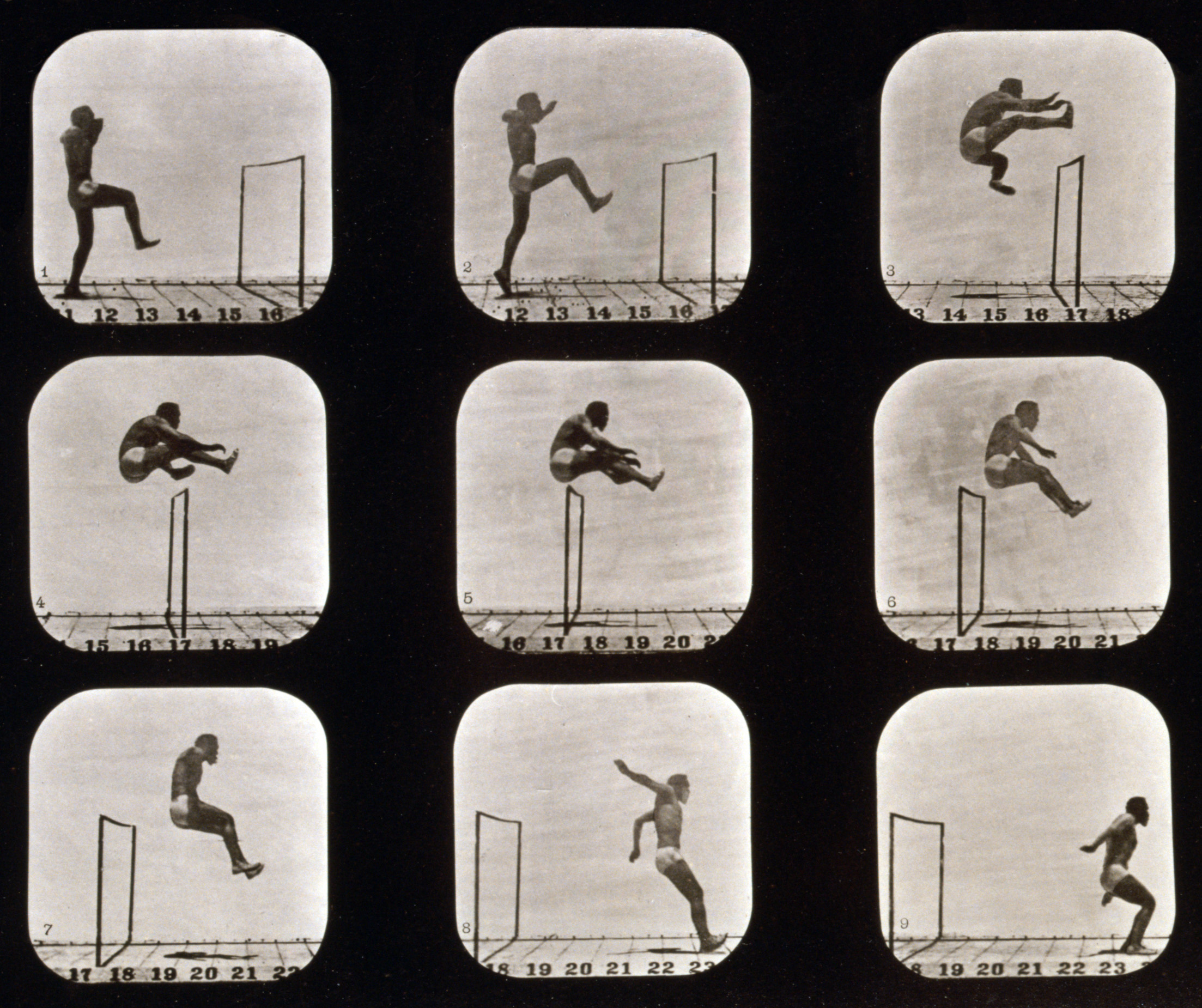
I'm not exactly sure what the name of this image is, but I really am a fan of Muybridge's motion pictures. Frame by frame they give you an idea as to how things play out. This image is of a man jumping over a hurdle which could be pretty helpful, I think, to a hurler trying to learn the correct technique.

 
This photo is a little different than the rest of Muybridge's work but it is just as magnificent. The reflection of the trees across the water is a magical display and almost looks like you're about to enter an alternative universe. 

Monday, November 4, 2013

Julia Margaret Cameron

Julia Margaret Cameron enhanced.jpg

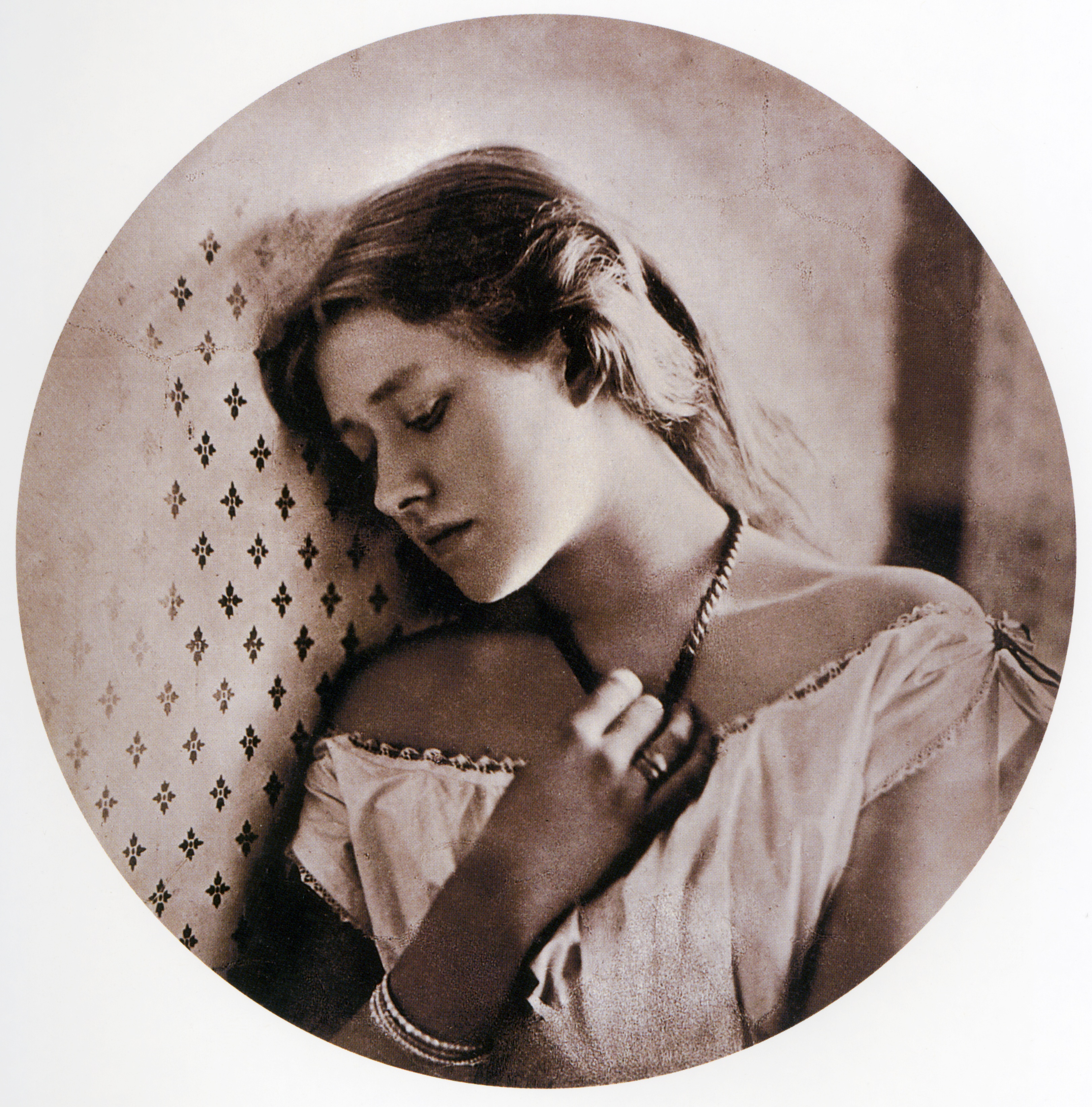
Julia Margaret Cameron was born in Britain in 1815. She received her first camera from her daughter and son-in-law as a gift in the hopes that it would entertain her. At the time she was 48 and in the next year she would become a member of the Photographic Societies of London and Scotland. Most of her photos were of soft and dreamy looking portraits. Many of her portraits were of then famous people also. Many of her later life is spent in Sri Lanka, India but unfourtunatly most of her work did not survive. The rest of Cameron's days were lived out in Sri Lanka and she later caught a cold which brought her to her demise.

This photo was a self-portrait of Cameron. What I like about this image is the darkness that swallows her face. It reminds me of a creepy nun.

I noticed that Cameron had done numerous photos of angels but this one is my favorite. The way that the angel looks so morose and the wings, how they cradle the child's head.

I believe this subject was a famous woman, but I'm not quite sure what her name is. I really liked how Cameron was very good at showing emotion in her works and this is a very good example. 

Imogen Cunningham

Imogen Cunningham was born in Portland, Oregon on April 12, 1883.She became involved with art at a young age, as her Father encouraged her to take painting classes. Cunningham later went on to college in Seattle and gained a degree in chemistry to assist her with photo processing. After her college graduation she worked at a studio in Seatlte. From this studio she learned how to properly platinum print images. Cunningham later went and won an award in Germany for her processes. When she got married to Roi Partridge. After the birth of her sons, Cunningham was restricted in the household but her photography prospered. In this stage she produced beautiful magnolia photos. Imogen Cunningham's photos are still popular today and I happen to like them. I love the angles and shadows in her work.


photo link
This photo is really beautiful because of the white purity of the magnolia flower. All of the petals are bursting out from the center.


link
This photo is an example of the amazing work that Cunningham can manage. The shadows from the sheets are so eye capturing.


link
Just the subject being hands draws in my attention. I think it has to be one of my favorite subjects and the way the fingers are posed to play the instrument are unique. The strings also provide a nice set of leading lines.

Thursday, October 17, 2013

More Creepy Inspiration


I really like the tones in this color and how dark it is. I think that the darkest images look the best. The ladies eyes are so glassy and her mouth is amazing

My Favorite Photo So Far


If you can't tell, the man has a piece of plastic stuck around his body, it's so creepy and effective, yet if it were a bird or some other type of animal people would feel that is was a less powerful image. "So what? It's just an animal." I love the meaning behind this photo and I like how the water is murky and disgusting. I just can't describe how amazing and scary this photo is.